
Learning Theory: Introduction, Advanced Theory & Clinical Applications
 Wed, 11 March, 2026
 03:00 pm - 05:30 pm
(Your Local Time Zone)
03:00 pm - 05:30 pm
(Your Local Time Zone)


Species
Equine
Contact Hours
2.5 Hours - RACE Approval Pending
Language
English
Discipline
Behaviour
Growth Partners
Europe

Veterinary Partners
Global


North America









Europe












Middle East & Africa

Asia-Pacific


Time: London 7PM / Paris 8PM / New York 3PM / Sydney 6:00AM (+1)
Part of the Clinical Equine Behaviour - Science, Welfare & Behavioural Medicine Online Lecture Series
CONTENT DESCRIPTION
Learning theory is the body of knowledge that describes learning processes in animals. Since training is the application of learning processes in order to interact successfully with animals, a knowledge of learning theory is vital for all animal handlers.
Learning theory is divided into two major learning processes: associative learning and non-associative learning. Associative learning also has two main subsets: operant and classical conditioning. Operant conditioning includes negative reinforcement and positive reinforcement which both have important roles to play in terms of the application and subsequent release of tactile pressure (negative reinforcement) and in terms of rewarding behaviour through supplying the animal with something that it wants (positive reinforcement). Both of these have important and very relevant roles in handling animals safely.
Classical conditioning in horse training involves the uptake of benign cues and signals that become paired with various responses that trainers want to reinforce in horses. Understanding the process of installing these cues is vital for effective control and confers predictability to the animal’s perception of training tasks which is a requirement for calmness.
Finally, non-associative learning includes habituation where initially noxious stimuli can be rendered innocuous. This habituation can be utilised as various training techniques in fearful situations and are known as desensitisation techniques. These should be part of the veterinarian’s tool-box and are extremely helpful to the veterinary clinician to make handling and treatment of horses not only safer and effective but also can provide positive welfare for horses.



Orla Doherty qualified as a veterinarian from University College Dublin in 1992 before completing a Master’s Degree in Applied Animal Behaviour and Animal Welfare at the University of Edinburgh. In 1994 Orla set up the Animal Behaviour Clinic in Ireland, a veterinary referral behaviour clinic treating problem behaviours in horses, dogs and cats. Orla completed a PhD at the University of Limerick in 2016 on tack usage in horses, and an Australian Diploma in Equitation Science (completed in 2017). She has numerous peer reviewed publications in scientific journals, and provides expert opinion in legal cases regarding animal behaviour and welfare. Orla provides an Animal Behaviour and Welfare consultancy (to Dublin Zoo, 2016-2019 and Wild Ireland, 2022- present).
Orla lectures and gives workshops and clinics to veterinary surgeons, horse owners, riders and trainers and farm staff in Ireland and abroad. Orla is an Associate Lecturer at University College Dublin, and was Hon President of the International Society for Equitation Science from 2019-2021. Orla competed in showjumping, dressage and eventing and continues to ride when time permits.
More Info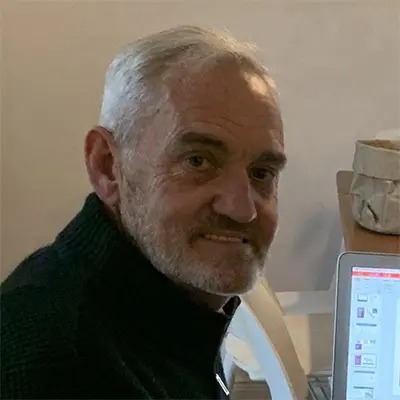
Andrew is a clinical and forensic ethologist with specialist academic areas in animal cognition, equine learning/training and welfare science.
As an independent scientist, Andrew has authored and co-authored in excess of 80 research and review papers and conference presentations and 10 horse and elephant training texts. In 2020, he co-authored the most recent Five Domains Model of Animal Welfare, focusing on human-animal interactions. Andrew has been co-winner of the Eureka Science award and the Premio Flambo Award for Animal Welfare (Italian Equestrian Sports Federation). In 2014, he was awarded the John H Daniels Fellowship from the USA National Sporting Library, Virginia and in 2016, he was King Scholar invitee at the University of Arkansas.
Andrew has dedicated the past couple of decades to teaching evidence-based horse training and management in workshops across Western Europe as well as the USA, Canada, South Africa and New Zealand. In doing so, he has coached four Olympic medalists, seven National Equestrian Federations and in 1996 he coached the Indian Eventing team to win its first ever medal in international competition using techniques that he derived from and understanding of equine learning and cognition. Andrew founded and directed the Australian Equine Behaviour Centre in 1995 and is currently the CEO of Equitation Science International. He is Patron of Pony Club Australia and as a former Director, he has instigated a revolutionary syllabus that leads the world in equestrian education for young riders. Andrew is also Founder of the Human-Elephant-Learning Programs Foundation, a not-for-profit charity that delivers evidence-based elephant training, management and conservation education across South and Southeast Asia and is supported there by various government organisations. He is also the Australian representative of the IUCN Asian Elephant Specialist Group.
A winner of the Advanced section of the famous Gawler Three-Day-Event in 1989, Andrew has enjoyed a decorated and very diverse equestrian sport career. He has represented Australia in three-day eventing and competed in State and National titles in FEI dressage, eventing and showjumping and more recently was Australian National Champion in Tetrathlon in 2018 in the 32+ age group.
More InfoQualified Vet
Webinar
USD 180.00
Intern/Resident/PhD (Requires proof of status)
Webinar
USD 135.00
Vet Nurse/Vet Tech (Requires proof of status)
Webinar
USD 135.00
Physiotherapist / Physical Therapist
Webinar
USD 135.00
Farrier
Webinar
USD 135.00
Non-veterinary Attendee
Webinar
USD 135.00
Veterinary Student (Requires proof of status)
Webinar
USD 35.00
If the options you are looking for are unavailable, please contact us.
No tax will be added unless you are a UK taxpayer
Choose currency at checkout